
India Achieves Nuclear Criticality — But Where Does It Stand Among the Top 10 Countries With the World’s Largest Uranium Reserves?
Top uranium reserves countries- In a landmark moment for South Asian energy strategy, India has achieved nuclear criticality in its advanced reactor programme — signalling a significant leap in its domestic nuclear capabilities. Yet, even as India celebrates this milestone, a fundamental challenge looms large: the country is not among the top uranium reserves countries of the world. With uranium reserves by country 2026 data placing Australia firmly at the summit of the largest uranium reserves in the world, India’s growing nuclear ambitions are directly tied to international supply chains it does not control.
This report provides a complete global uranium reserves ranking for 2026, explains why Australia has the largest uranium reserves, analyses the india uranium reserves rank in world 2026, and explores the geopolitical stakes of the global nuclear fuel market.
📌 News Angle: “Australia dominates global uranium reserves, while India ranks outside top 10, highlighting import dependence amid rising nuclear energy demand.”
As global uranium reserves ranking 2026 data reveals Australia’s dominance, India’s position outside the top 10 countries with uranium reserves raises urgent questions about nuclear self-reliance and energy security.
⚡ Key Highlights at a Glance
- Australia holds the world’s largest uranium reserves — approximately 28% of total global supply, making it the undisputed number-one uranium nation.
- Kazakhstan leads in uranium production, accounting for nearly 43% of global annual output, though its reserves rank second.
- India ranks outside the top 10 in global uranium reserves, possessing only around 9,000–10,000 tonnes of known uranium resources.
- India imports uranium from Australia, Russia, Canada, France, and Kazakhstan to fuel its 22+ nuclear reactors.
- Demand for uranium is surging globally as over 60 new nuclear reactors are under construction worldwide in 2026.
- The top uranium producing vs reserves countries difference is stark — production leaders and reserve leaders are often different nations.
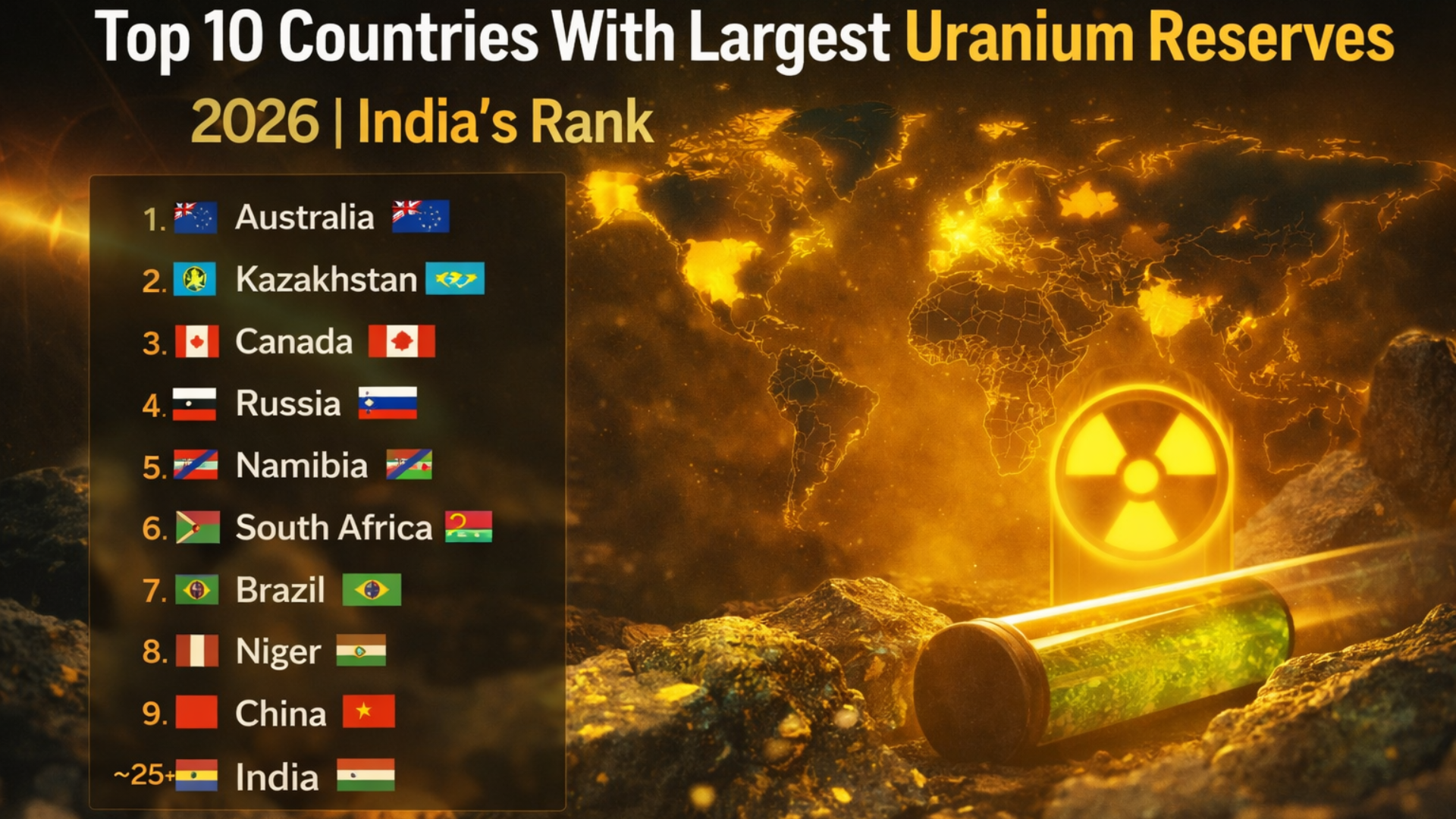
Top 10 Countries With the World’s Largest Uranium Reserves (2026)
According to the uranium reserves ranking world latest data published by the World Nuclear Association (WNA) and the OECD/NEA Red Book 2025, here is the definitive top 10 countries with uranium reserves 2026 list:
Why Australia Has the Largest Uranium Reserves in the World
The reason behind having the largest uranium reserves in Australia is the country’s geological uniqueness of ancient origin. Australia is the land with the world’s largest geological formations – Precambrian rocks, more than 600 million years old, which have uranium deposits through natural enrichment via hydrothermal fluid circulation over millions of years.
Australia’s significant mining areas for uranium ore include the Olympic Dam, located in South Australia (the world’s largest polymetallic ore body), the Ranger deposit, located in the Northern Territory, and also Yeelirrie and Kintyre in Western Australia. With all these deposits combined,These deposits collectively position Australia as the undisputed answer to which country is number 1 in uranium reserves.
However, though Australia has 28% of total global uranium resources, the country is not the leader among uranium producers. It is an example of the comparison between uranium reserves and production of this metal in different countries due to the presence of strict environmental and legislative norms.
India’s Uranium Reserves Rank in the World 2026 — The Uncomfortable Truth
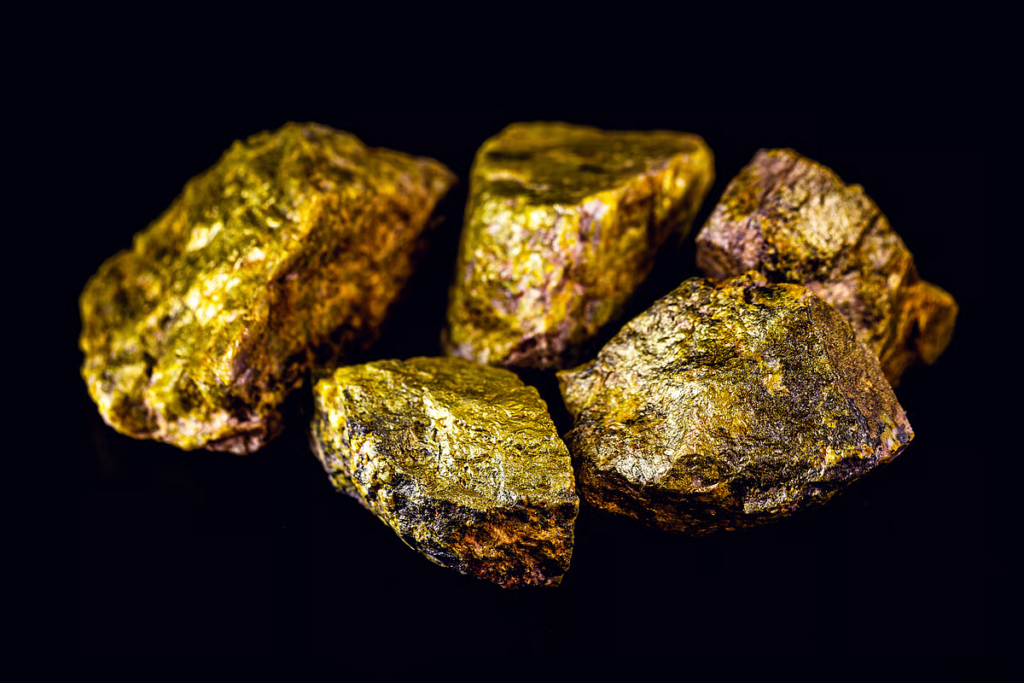
How Much Uranium Does India Have?
India’s proven uranium deposits are estimated to be in the range of about 9,000 to 10,000 tons of uranium – just a small percentage when compared to global front-runners. It would thus come to no surprise that the query on how much uranium India possesses would certainly place them far from being among the top ten countries in terms of uranium deposits.
Uranium Mines in India: List and Overview
India’s uranium deposits are concentrated in specific geological zones. The major uranium mines in India include:
- Jaduguda Mine (Jharkhand) — India’s oldest and primary uranium mine, operational since 1967
- Bhatin and Narwapahar Mines (Jharkhand) — part of the Singhbhum Shear Zone
- Tummalapalle Mine (Andhra Pradesh) — India’s largest uranium deposit by estimated reserve size, with ~49,000 tonnes of ore
- Domiasiat Deposit (Meghalaya) — long-pending due to local resistance and environmental concerns
- Lambapur-Peddagattu (Telangana) — awaiting full operational clearance
Despite these sites, india uranium production vs world share remains below 1% — the domestic output is woefully inadequate to fuel India’s expanding nuclear fleet.
Why India Imports Uranium
India imports uranium due to several fundamental reasons, which include that the indigenous deposits are poor in quality, meager in quantity, and restricted to certain locations within the country. The amount of uranium required by India’s nuclear reactors every year exceeds what the domestic mines can produce. After the historic India-US Civil Nuclear Cooperation agreement of 2008, India was granted entry into the Nuclear Suppliers Group (NSG) exemption process, allowing it access to international uranium supplies.
Currently, India imports both enriched and natural uranium from Australia, Russia (Rosatom), France, Canada, and Kazakhstan.
India Achieves Nuclear Criticality: Why Scientists Are Calling It an “Akshay Patra Moment”
Top Uranium Producing vs Reserves Countries: Key Difference Explained
A critical distinction often missed in uranium reserves geopolitics analysis is that which countries control uranium resources globally is not always the same as which countries produce the most uranium. Here is the key divide:
Reserves vs Production — A Tale of Two Rankings
- Australia — #1 in reserves (~28%), but only #4 in annual production (~7–8% globally)
- Kazakhstan — #1 in production (~43%), but #2 in reserves (~14%)
- Canada — Top 3 in both reserves and production, highest-grade uranium ore on Earth (Athabasca Basin)
- Namibia & Niger — High reserves, moderate production; dependent on European companies (Orano, etc.)
- Russia — Mid-level reserves but significant processing and enrichment dominance through Rosatom
This top uranium producing vs reserves countries difference has profound geopolitical implications. Nations like Kazakhstan and Canada wield enormous market power through active production, while Australia’s vast untapped reserves make it a long-term strategic energy partner for nuclear-dependent countries — including India.
Global Uranium Supply Crisis: Countries at Risk in 2026
Listed in the uranium supply crisis countries 2026 are several countries that rely on imports and are increasing their nuclear capacities. The uranium spot price crossed the USD 100/lb mark in late 2023 and is currently high owing to the rising demand from the current global nuclear renaissance.
The ranking of countries that demand uranium for nuclear energy is headed by Japan, South Korea, France, India, and the US. France derives more than 70% of its electricity from nuclear energy but has no significant uranium resources. South Korea and Japan depend entirely on imported uranium.
Uranium reserves world news 2026 cycle has revolved around: resumption of uranium production in Kazakhstan after clearing COVID backlogs, Australia speeding up export arrangements, new uranium politics in Africa after Niger’s military coup that disrupted the French supply chain, and China signing off-take agreements across Africa, Central Asia, and Canada.
Strategic & Geopolitical Impact Analysis
Uranium Geopolitics Analysis in 2026 shows that uranium is emerging as a key strategic mineral on par with lithium, cobalt, and rare earths. The top nations in terms of their uranium deposits – which includes countries like Australia, Kazakhstan, and Canada – exercise soft power through supply arrangements.
For India, the accomplishment of nuclear criticality is a win at home, but the future of nuclear power depends on establishing a reliable source of uranium. As for a strategic direction for future uranium requirements, India’s switch to thorium (of which it is the third largest holder with around 846,000 tonnes) is a promising option. In fact, India’s Advanced Heavy Water Reactor (AHWR) plan, using thorium fuel, will gradually lower its need for imported uranium by the 2040s.
At the same time, what countries hold the uranium will affect global power dynamics related to nuclear energy for decades to come. Since Australia is unwilling to mine more uranium, and Kazakhstan is becoming increasingly dependent on China, India needs to carefully plan for the future.
🧠 Conclusion: India’s Nuclear Future — Ambition vs Resource Reality
India’s nuclear criticality milestone is a genuine scientific achievement and a step toward energy independence. However, India’s uranium reserves rank in the world remains far outside the top 10, and the country will continue to depend heavily on imported uranium for the foreseeable future. As the top uranium countries latest report for 2026 confirms, Australia dominates reserves, Kazakhstan dominates production, and nations like India must build resilient diplomatic and commercial frameworks to secure their nuclear fuel supply. The global uranium market is entering a new era of strategic competition — and India’s seat at the table will depend as much on diplomacy as on geology.
FAQs
Q1. Which country has the largest uranium reserves in the world in 2026?
Australia holds the world’s largest uranium reserves in 2026, with approximately 1,684,100 tonnes — around 28% of the total global uranium reserve base. It is followed by Kazakhstan and Canada in the global uranium reserves ranking.
Q2. What is India’s uranium reserves rank in the world in 2026?
India ranks approximately 25th to 30th in the world for uranium reserves. India has only about 9,000–10,000 tonnes of known uranium resources, placing it well outside the top 10 countries with uranium reserves by country 2026.
Q3. Why does India import uranium despite having nuclear reactors?
India imports uranium because its domestic reserves are small, low-grade, and insufficient to meet the fuel demands of its 22+ operating nuclear reactors. Following the India-US civil nuclear deal in 2008, India gained access to international uranium markets and imports from Australia, Russia, Canada, France, and Kazakhstan.
Q4. Is Kazakhstan the top uranium producer even though Australia has more reserves?
Yes. This is the classic uranium reserves vs production countries difference. Kazakhstan produces around 43% of global uranium annually, making it the top uranium-producing nation. Australia has far larger reserves but produces comparatively less due to regulatory and environmental constraints on mining expansion.
Q5. How is the global uranium supply situation in 2026?
The global uranium supply in 2026 is under strain due to surging nuclear energy demand, geopolitical disruptions (especially in Niger and Russia), and China’s aggressive uranium procurement strategy. Uranium spot prices remain elevated, and many countries face a supply-demand gap as over 60 new nuclear reactors are under construction globally.

Pingback: Amir Hamza Shot in Pakistan India's Most Wanted Terrorist