
Geopolitics can be defined as the analysis of how space affects politics and how it affects economic relationships and strategic decisions among different actors. It combines elements of global politics, economics, and security studies. It explains why different countries are interested in different rivals and why they are interested in different routes and resources. The question of why geopolitics matters in the current world focuses on how space and other factors are affecting current events.
Geopolitical analysis typically examines territory, resources (notably energy), demographics, infrastructure, and technology to understand national behavior and predict outcomes in international relations.
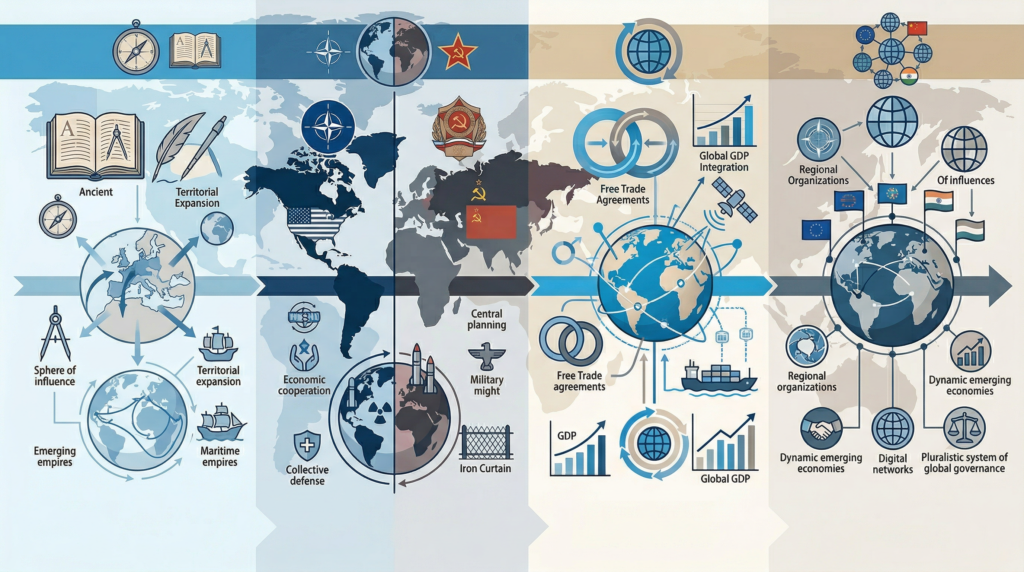
Historical Background and Timeline
Early ideas and 19th-20th centuries
The importance of geography to statecraft was recognized by the classical thinkers, but the formal study of geopolitics developed in the late 19th and early 20th centuries, with the influence of Halford Mackinder’s Heartland Theory and Alfred Mahan’s work in naval geography.
Cold War Era
The bipolar contest between the United States and the Soviet Union reframed geopolitics around ideology, alliances, and containment strategies. Military basing, proxy wars, and strategic chokepoints defined global power dynamics through this period.
Post-Cold War and 21st centuries
Globalization has brought some prominence to the role of the economy, but the recent past has also witnessed regional conflict , and the global balance of power is also influenced by the issues of energy and technology supplies.
Core technologies and analytical components
Although it is not a singular entity, it is comprised of various technological means and analytical processes that are utilized to achieve its goals:
Methods & Algorithms
- Geospatial Analysis: Spatial statistics and mapping to analyze terrain, borders, and infrastructure.
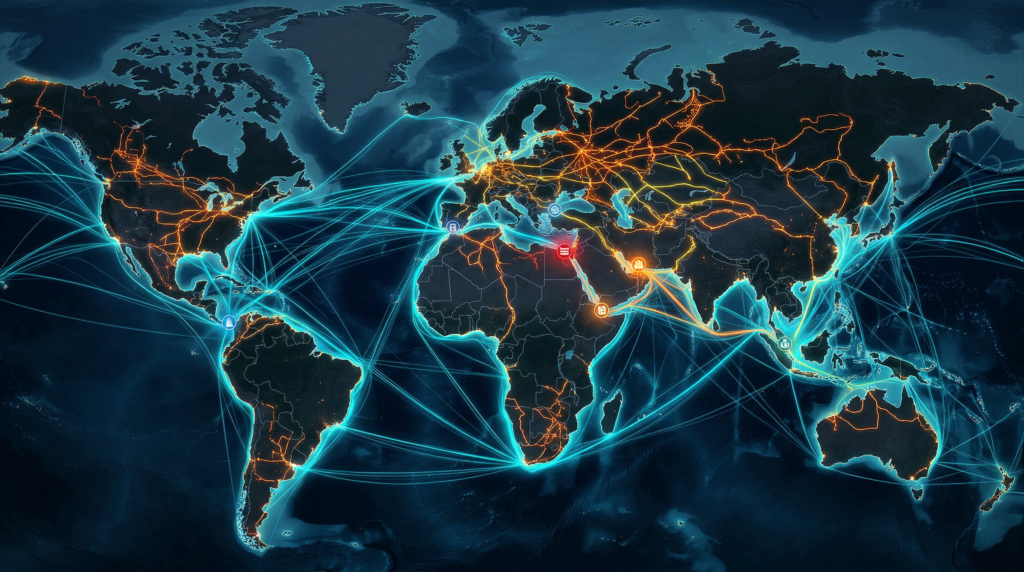
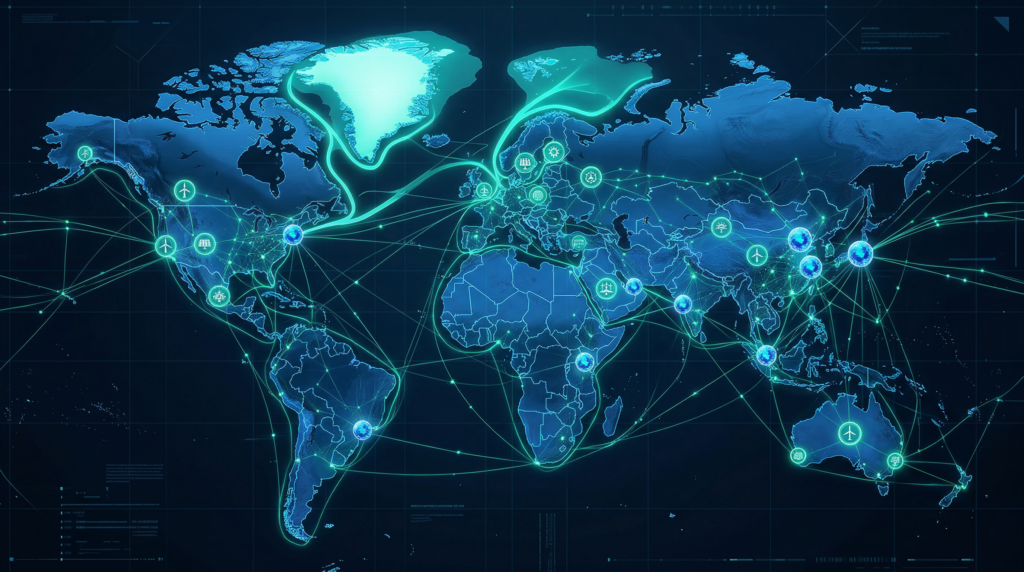
- Network Analysis: Analyzing networks of trade, alliances, and logistics to identify potential chokepoints.
- Forecasting Algorithms: Scenario planning and probability calculations for assessing risks.
Data & Hardware
- Remote Sensing & Satellites: Imagery acquisition for tracking movement, land use, and environmental changes.
- Big Data Platforms: Aggregating data on trade, economic, and social media activity for real-time situational awareness.
- Computing Resources: Cloud computing and high-performance computing for simulations and data integration.
With these means, it is possible to transition from descriptive geography to predictive analysis, utilizing empirical data to guide foreign policy decisions.
Major applications and case studies
Energy and resource security
Energy shapes many strategic choices. Control of pipelines, shipping lanes, and access to minerals illustrates geopolitics and energy security in action. Policymakers frequently balance domestic needs, alliance management, and commercial interests when making decisions about energy routes [Source: IEA, 2022].
Trade and supply chains
Disruptions in shipping or sanctions illustrate how geopolitical conflicts affect trade—from semiconductor shortages to rerouted maritime traffic. Businesses and states must plan for supply-chain resilience and alternative sourcing [Source: World Bank, 2021].
Security and defense planning
Military basing, alliance networks, and deterrence postures arise from geographic assessments: proximity to potential hotspots, chokepoints, and strategic lines of communication.
Diplomacy and soft power
Geopolitical calculations guide diplomacy: development aid, cultural ties, and international institutions are tools to expand influence without direct coercion.
Present-day landscape and trends
The key features of the contemporary landscape are:
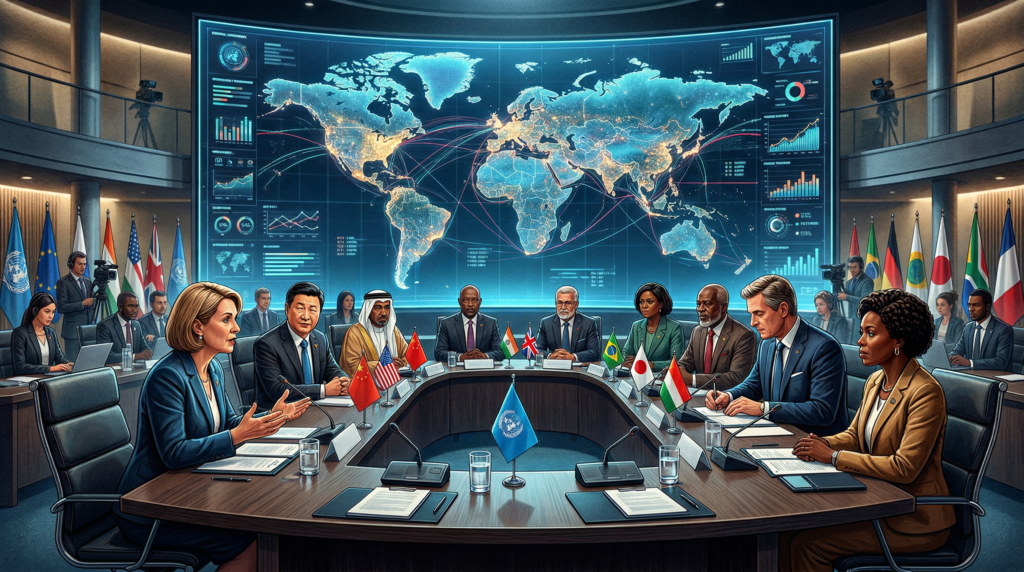
- Multipolar competition, where economic and technological rivalry between major powers is prominent.
- The focus on energy security, as climate transition changes the pattern of supply and demand.
- The use of sanctions, trade measures, and “grey zone” warfare, as opposed to direct conventional warfare.
- The use of data-driven approaches, like satellite imagery and trade analytics, to help inform policy.
The combination of economic interdependence and strategic competition makes the impact of geopolitics on global economy both immediate and structural.
Future outlook
Short term (1-5 years)
- Ongoing supply chain diversification and trade protectionism.
- Competitions over key technologies and energy routes.
Mid term (5-15 years)
- Structural changes driven by renewable energy that will alleviate some traditional pressures while generating new pressures on resources. The evolution of global power will be driven by demographic and technological changes.
Long term (15+ years)
- Climate change altering borders, migration, and even sea routes (Arctic access). Long-term patterns will redefine strategic issues and potentially alter some of the traditional ways that how geography influences politics.
Benefits and Opportunities
- Better-informed policy-making through evidence-based geographical analysis.
- Opportunities for cooperation in international issues: Climate Change, Pandemics, Infrastructure.
- Strategic economic planning for improved resilience and access to new markets.
Countries that integrate geospatial intelligence and economic planning can better manage risks and attract investment.
Risks, ethics, governance, and mitigation
Risks
- Escalation of regional conflicts and miscalculations.
- Economic consequences of wide-ranging sanctions or trade weaponization.
- Abuse of surveillance or privacy issues related to geospatial technologies.
Governance and mitigation
- Enhancement of international norms for conflict resolution, sanctions targeting, and data governance.
- Clear international frameworks for conflict resolution and resource management that are transparent to all parties [Source: UN, 2020].
Ethical frameworks should be provided to accompany technologies to prevent abuse or harm to civilians.
Implementation considerations (data, computing, skills, cost)
- Data needs: High-quality economic, demographic, and geospatial datasets.
- Skills: Analysts with training in GIS, economics, and international law.
- Costs: Investment in data acquisition, computing infrastructure, and secure communications; partnerships with academic and private sectors can reduce burden.
Successful implementation balances technical capability with institutional safeguards and policy clarity.
Practical advice for readers
- Stay updated with world news from reliable sources and institutions.
- Basic concepts of international relations should be learned to understand policy changes.
- For businesses: Supply chain mapping should be done, and scenarios should be tested.
- For students: Geopolitics should be learned along with data skills like GIS and statistics to remain relevant.
Notable examples (short case summaries)
- Russia-Ukraine (2022): Issues of energy security, sanctions, and their effects on global food security and prices showed how geopolitics and energy security are interconnected, as evidenced by the ripple effects experienced in European countries’ energy security [Source: IEA, 2022].
- US-China technology rivalry: Export controls and investment screening in global technology supply chains are a manifestation of global power relations, especially in the technology industry.
- Suez Canal Blockage (2021): Geopolitics of global trade routes was evidenced by an event in maritime trade, showing how geopolitical tensions affect global trade, as seen in the ripple effects of the Suez Canal Blockage [Source: World Bank, 2021].
ALSO READ- Iran and U.S. Hold Nuclear Talks in Geneva Amid Rising Global Tensions
ALSO READ- India Hosts High-Profile AI Summit in New Delhi With Global Leaders and Tech CEOs

Pingback: Oil Prices Spike & Global Economic Shock from Iran War -