Overview
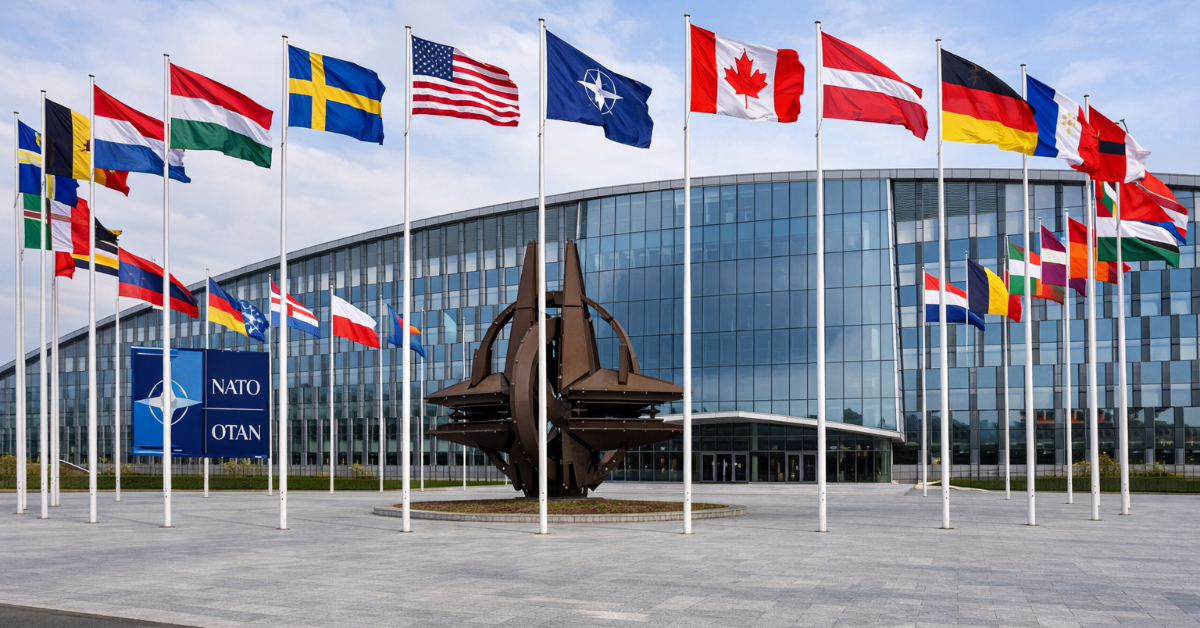
At its most basic level, the answer to What is NATO? is simply contained in its name: it is the North Atlantic Treaty Organization. NATO is an intergovernmental military alliance of 30 North American and European countries, founded in 1949. At its most basic level, the mission of NATO is to ensure the freedom and security of its members by providing collective defense. For example, if any of its members are attacked, all of the others will consider themselves attacked as well (Article 5). NATO supports democracy and security by uniting North American and European countries in military cooperation. It establishes a connection between Western democracies in terms of a mutual defense treaty under international law. NATO is defined as a Western military alliance with a common goal of defending democracy. Currently, it is headquartered in Brussels, Belgium, and it plays a vital role in world security. The question What is NATO? Essentially, it refers to a treaty alliance and its goal of defending democracy and maintaining peace in the world. Likewise, What is NATO and how it works? The answer to this question is found in its founding principles and its collective defense mechanism. For instance, to make it easy to understand, NATO full form is “North Atlantic Treaty Organization.” Therefore, NATO meaning is found in its full form, which is a treaty alliance of military organizations. Therefore, NATO alliance definition in simple words refers to cooperative defense in which all the partners in the alliance are ready to defend each other.
History and Formation
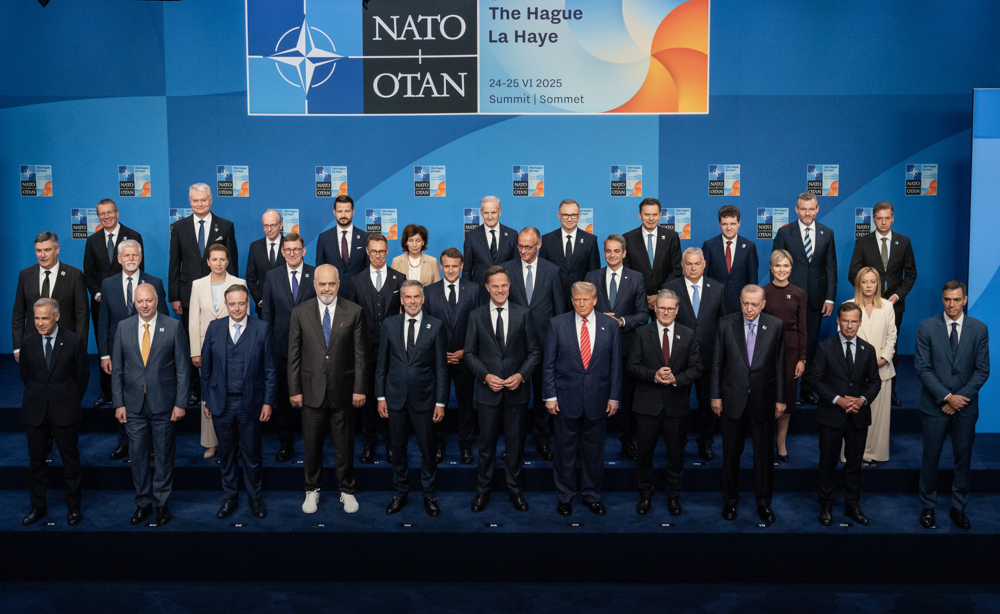
NATO’s founding treaty, the North Atlantic Treaty, was in essence an agreement on cooperation in defense, which was signed on 4th April 1949 by 12 countries, including the US, the UK, and France. The treaty was formed as a response to the expansion policies of the U.S.S.R. after WWII, and this NATO collective defense system explained the necessity for the allied treaty. During the Cold War, NATO faced off against the Warsaw Pact, led by the Soviet Union. The first round of NATO expansions occurred in the 1950s, with Greece and Turkey in 1952, and West Germany in 1955. Spain joined in 1982. Since the Cold War, many former Warsaw Pact countries have joined, including Poland, Hungary, and the Czech Republic in 1999; several Balkan and Baltic countries in 2004; Albania and Croatia in 2009; Montenegro in 2017; and North Macedonia in 2020.
NATO’s expansion history is a function of post-1991 security needs. Today, NATO comprises 30+ countries in North America and Europe, representing a general concept of allied military command structure involving dozens of democratic countries.
Structure and Decision-Making
For those wondering what is NATO in practical terms, the alliance is organized with a consensus-based structure. The North Atlantic Council (NAC), which includes all ambassadors and leaders from the different member states, is the highest decision-making body in the alliance. All decisions must be unanimous, and as such, decisions are reached through a consensus among all the members of the alliance. The Secretary General, the highest civilian authority in the alliance, heads the Council and runs the alliance’s secretariat. In terms of military structure, the alliance has an integrated military structure with the allied military command structure having the Supreme Allied Commander Europe (SACEUR) heading the operations from SHAPE headquarters in Belgium. Officers from the different armed forces coordinate through various committees to forge strategies in the alliance. NATO structure and functions explained entails the combination of the political councils and the military structure that is united in the alliance. For clarity, NATO decision making process explained entails the decisions being unanimous, meaning that all the members must agree on the course of action to be taken. The alliance does not have its own army; instead, the individual states contribute their own armies, which are then organized into the alliance structure.
Roles and Missions
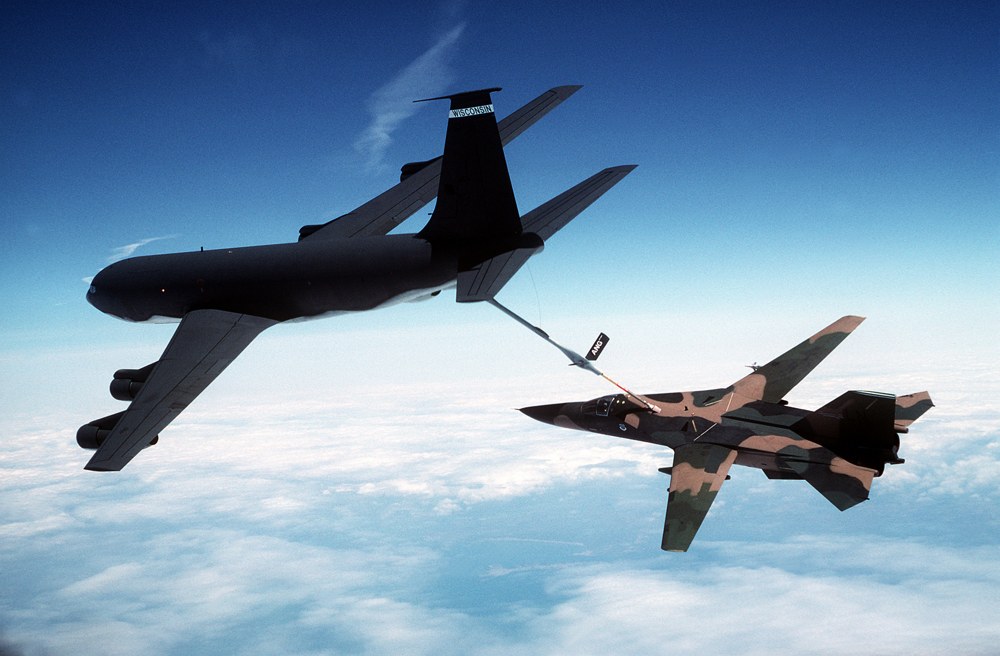
For many, understanding What is NATO means knowing how the alliance conducts military operations. NATO’s primary role is collective defense: if any member is attacked, all allies respond in unity. The alliance’s treaty explicitly “to safeguard the freedom and security of all its members”. Beyond Article 5, NATO undertakes crisis-management and peace support missions worldwide. It can carry out multinational forces in the capacity of an international crisis response force, thus showing the concept of multinational armed forces cooperation in the alliance. For example, it has been involved in peace and stabilization efforts in Bosnia and Kosovo, as well as in enforcing a no-fly zone in Libya. These are examples of how NATO military operations work in protecting its citizens and member states. In addition, it has been involved in addressing emerging crises like cyber attacks, missile defense, and hybrid warfare. In simple words, the meaning of the concept of NATO alliance in simple words is that it is an agreement among member states to cooperate in defense and pool their resources in the process. This is true since the joint planning of NATO is a demonstration of the concept of a global peacekeeping alliance.
Current Composition and Priorities
NATO currently has 32 members (30+). It is based on the principle of collective defense and is the main pillar of Western security. Its main base is Brussels, Belgium, where permanent institutions are in place for military and political coordination. Its current concerns are deterring Russian aggression, particularly since the Crimean conflict in 2014 and the Ukraine war in 2022, as well as counter-terrorism and cyber/space defense. In its latest 2022 Strategic Concept, it highlighted joint resiliency and the rise of new challenges (climate security, etc.). In practice, NATO plays a central role in global security by integrating the defense policies of Europe and North America. It has been involved in international peacekeeping missions (for example, training in Iraq). Its continued importance is a reflection of its ability to evolve and expand its membership and its remit, as well as its ability to strengthen transatlantic relations between its member nations.
Future Outlook

In looking forward, it is envisioned that NATO will change, but its fundamental role will still be the same. Some of the key goals in the short term include reinforcing Eastern Europe’s defenses, for instance, by increasing the number of battlegroups in the Baltic states, and integrating new defense technologies, such as Artificial Intelligence (AI), drones, and missile interceptors. In the mid-term, NATO is likely to witness further expansion, for instance, by possibly admitting Ukraine or Georgia, and further deepening partnerships in the Indo-Pacific region. In the long term, it is envisioned that NATO will be faced with the consequences of great power competition, for instance, by possibly discussing the issue of NATO vs China military power and the role of military power in global security, and also addressing non-traditional security issues, such as climate change-related catastrophes and pandemics. In realistic terms, NATO’s strategic security alliance role will include reinforcing allied defense, possibly by extending the definition of security beyond Europe, and ensuring that the alliance remains the backbone of allied defense, while also being able to undertake NATO global security missions wherever required.
Benefits and Opportunities
Many countries and citizens wonder What is NATO – in brief, it is defined as “a mutual defense alliance that provides security guarantees.” There are considerable benefits to becoming a NATO member. By providing a mutual defense alliance of armed forces, it effectively dissuades any potential aggressor much more effectively than any individual country could by itself. Smaller countries benefit from the armed resources of larger countries. By engaging in joint procurement and research ventures, such as missile defense systems and aircraft production, costs are minimized. NATO military exercises also strengthen all allied forces. Politically, it binds countries to common values by linking membership to democratic values and security by requiring civilian control of the military and stable governance. Economies of scale in defense production, logistics, and intelligence are also advantages of membership. NATO effectively enhances the defense of all its members by providing a powerful united front of defense and unity.
Risks and Ethical Concerns
The role of NATO is also a matter for discussion. It has been said that the enlargement of NATO in Europe has led to tensions in the region, as shown in the comparison between NATO vs Russia military strength. It has been stated that the power of NATO is more than the power of Russia, and this has created tensions in the relationship between the two parties. Another matter for discussion is the intervention in non-NATO countries. It has been said that the intervention in Libya in 2011 (backed by the UN) was limited in its results and created instability in the country. There are also internal problems in the alliance. It has been said that the alliance does not achieve the target of 2% of the country’s GDP in many cases and that the decision-making process is based on consensus, which can be a problem in the relationship between the members. The ethical aspects are also a matter for discussion in the use of the forces and the intervention in other countries.
Governance and Membership
NATO’s authority is based on the North Atlantic Treaty, which is still legally in force. All the member states have ratified the treaty and consider it binding. The North Atlantic Council makes policy decisions at the ambassadorial or head-of-state level through unanimous consent. Various subsidiary committees assist in the execution of policies, including the Defense Planning Committee and the Nuclear Planning Committee. The Secretary General and the Supreme Allied Commander provide continuity and coordination. NATO’s authority is based on international law as well as the national laws of the member states because of its intergovernmental security alliance basis. Member states implement the treaty at the national level. To become a member of NATO, a state has to fulfill political and military requirements. It has to be a democracy and have a fully functioning military. Once invited to join, the state has to fulfill the requirements of the Membership Action Plan to be compatible with NATO requirements. Key issues to be taken into consideration during the implementation phase include raising the defense spending and integrating the militaries with the NATO command structure. Partnership programs include the Partnership for Peace and the Mediterranean Dialogue. These programs allow non-members to cooperate closely with NATO.
Implementation Considerations
In practice, NATO’s policies are implemented by member governments. Each year NATO issues defence planning guidance aligning national forces with alliance objectives. The alliance’s common budget is small (covering headquarters and shared projects); most spending is national (NATO encourages ~2% GDP). The NATO funding and budget system thus mainly supports joint infrastructure. Interoperability is crucial: NATO sets technical standards for equipment and procedures so allied militaries can operate together. Countries incorporate NATO commitments into their defence plans, procurement, and training. For example, allied navies and air forces follow NATO compatibility protocols. Overall, each member adapts its national defense policies to fit within NATO’s framework of collective security.
Case Studies

- September 11, 2001: NATO invoked Article 5 for the first time in the face of the terrorist attacks in the United States. All the allies came together in support of the United States, and this led to the NATO mission in Afghanistan. This is an example of How NATO protects member countries through unified defense.
- Kosovo, 1999: NATO conducted air strikes to halt ethnic conflict and then led the Kosovo Force (KFOR) peacekeepers. This highlights NATO’s international peacekeeping role in restoring stability without a standing UN force.
- Libya, 2011: Under a UN mandate, NATO enforced a no-fly zone to protect civilians in Libya. The operation showed NATO’s rapid crisis response capability, though the aftermath was controversial.
- Baltic Air Policing (2014–present): NATO member states rotate fighter jets over Estonia, Latvia, and Lithuania to patrol their airspace. This ongoing mission demonstrates NATO’s collective defense in daily practice.
Practical Guidance
For policymakers and analysts: to answer What is NATO, consult NATO’s official documents (Strategic Concept, summit communiqués, defence reports) for authoritative information. Read NATO’s published materials and speeches of the Secretary General. Distinguish NATO’s mission by comparing with other organizations (see NATO vs UN security role: NATO is an alliance focused on military security, unlike the UN which emphasizes diplomatic peacekeeping). For governments aspiring to join, focus on NATO’s membership criteria (democracy, defense spending, interoperability) and follow the accession procedures. Researchers should also examine NATO’s partnership frameworks (Partnership for Peace, etc.) and crisis case studies. In summary, credible insight comes from primary NATO sources and allied policy analysis.
See also-
What is UPI: How India’s Digital Payment Revolution Transformed Finance