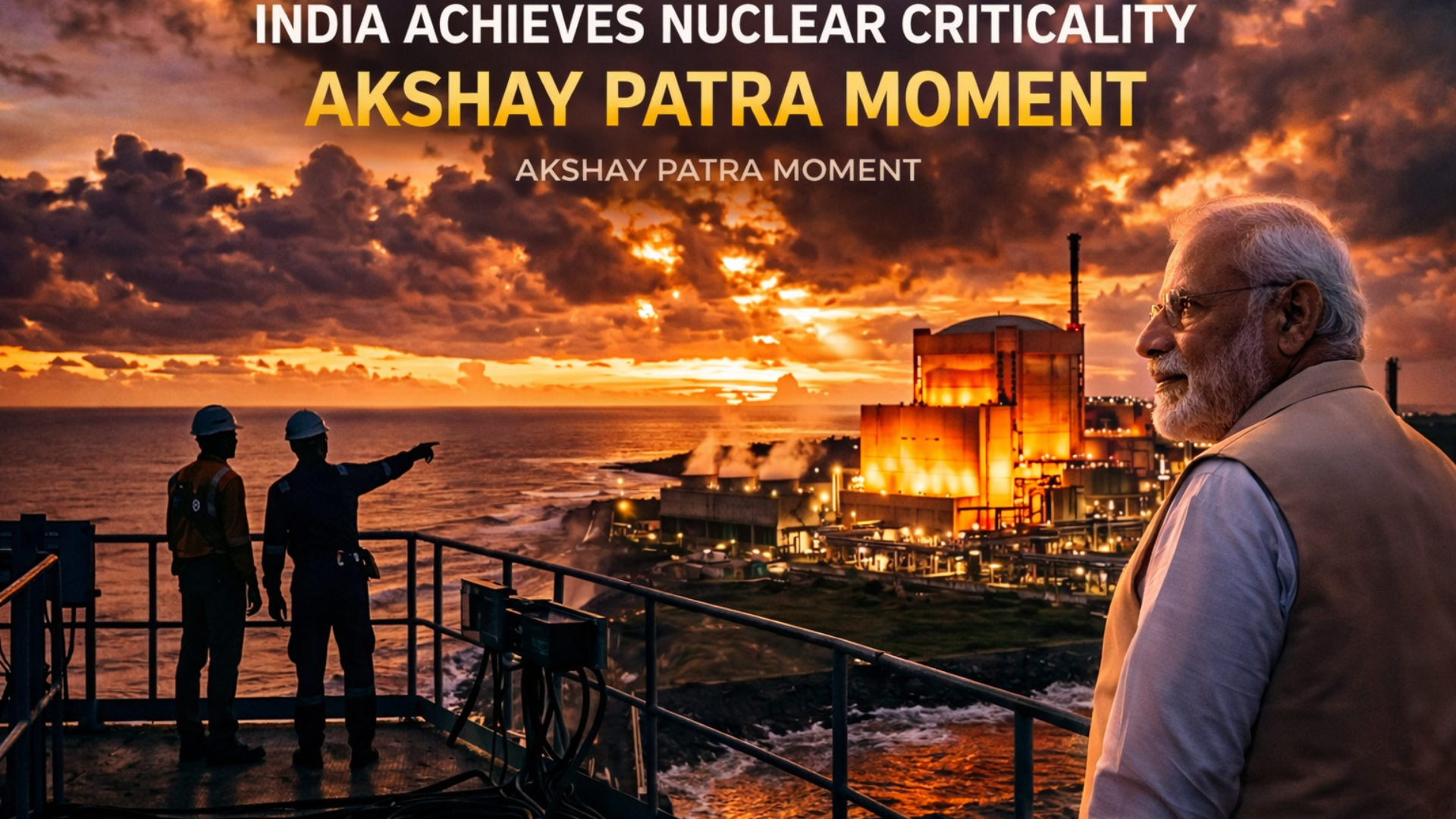
India nuclear criticality– India’s Prototype Fast Breeder Reactor at Kalpakkam has reached nuclear criticality — a reactor that makes more fuel than it burns, setting off what experts call a once-in-a-generation nuclear breakthrough for India’s clean energy future.
In a defining moment for India’s nuclear energy programme, the indigenously built 500 MWe Prototype Fast Breeder Reactor (PFBR) at Kalpakkam, Tamil Nadu achieved its first nuclear criticality on April 6, 2026. Prime Minister Narendra Modi described it as “a proud moment for India” and a decisive step in the country’s civil nuclear journey. With this milestone, India has officially entered Stage 2 of its legendary three-stage nuclear power programme — and in doing so, joined an exclusive club of nations at the frontier of advanced nuclear technology.
What is nuclear criticality — in simple terms?
The criticality of the nucleus marks the stage when the reactor attains a continuous nuclear fission reaction chain. Consider this as striking a flame to start the fire that will burn continuously without the need for additional sources of ignition. Criticality means that the neutron count generated in each cycle of reactions is sufficient to set off the succeeding cycles. This is sufficient to sustain a perpetual chain of reactions within the reactor.
However, it does not indicate that the power plant has started generating electricity. It is just the final step before starting the operation of the reactor. This phase indicates that the reactor core is functioning flawlessly. The PFBR, located in Kalpakkam, took two decades to reach this level of criticality.
Key highlights at a glance
- PFBR reached first criticality on April 6, 2026 at Kalpakkam, Tamil Nadu
- It is a 500 MWe sodium-cooled fast breeder reactor built by BHAVINI (Bharatiya Nabhikiya Vidyut Nigam Ltd.)
- India becomes only the second nation after Russia to achieve this with a commercial-scale fast breeder reactor
- The reactor produces more plutonium fuel than it consumes — earning the “Akshay Patra” label
- Over 200 Indian industries, including MSMEs, contributed to building the reactor — a true Aatmanirbhar Bharat achievement
- Commercial operations are targeted to begin by September 2026
- India aims for 100 GW of nuclear capacity by 2047 under the Nuclear Energy Mission
The “Akshay Patra moment” — what does it mean in science?
In Hindu mythology, the Akshay Patra is a divine vessel that never runs empty — it always provides more than it gives. Scientists and policymakers have used this metaphor brilliantly to describe the PFBR’s most extraordinary property: it creates more fissile fuel than it consumes.
Conventional reactors burn Uranium-235, which is scarce. India holds only 1–2% of the world’s uranium reserves. But the PFBR uses fast neutrons to convert abundant Uranium-238 into Plutonium-239 — a usable fissile material. Over time, this “closed fuel cycle” means India can generate electricity and grow its own fuel supply simultaneously — a near-limitless energy loop. That is the Akshay Patra moment in science.
India’s three-stage nuclear power programme
This India nuclear breakthrough is part of a grand strategy conceived by Dr. Homi J. Bhabha, the father of India’s nuclear programme, designed to take India from uranium-scarce to thorium-rich energy independence over centuries.
Why is India nuclear criticality important globally?
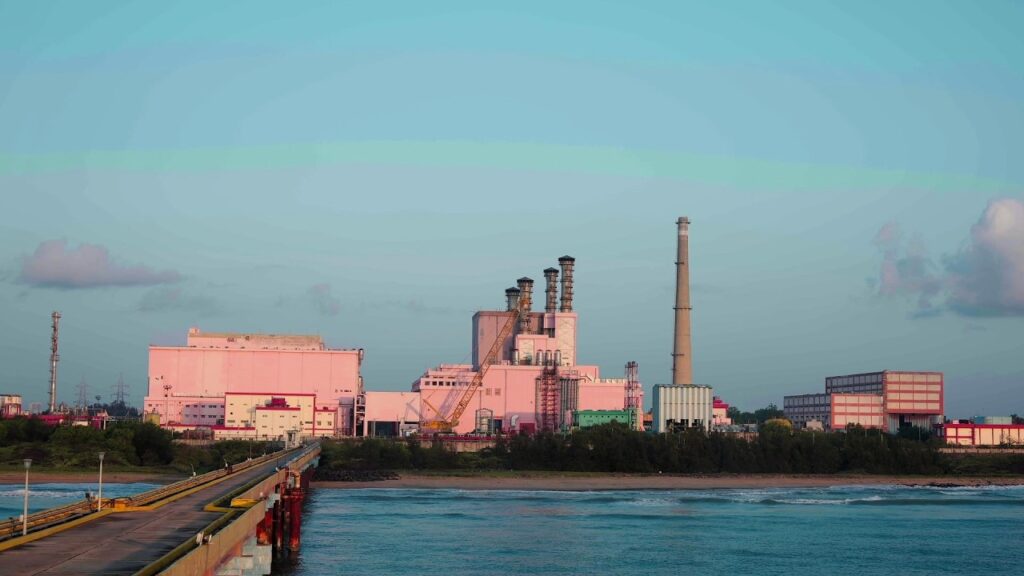
1. Energy security for 1,000 years
India holds nearly 25% of the world’s thorium reserves, found in the monazite sands of Kerala and Odisha. The PFBR’s success opens the gateway to Stage 3 — a thorium-based reactor programme that could power India for over a millennium. This is why the India nuclear achievement impact on future energy is simply incomparable.
2. Clean energy and net zero 2070
India’s clean energy nuclear program is not only for the future; it is now happening. The PFBR plays its part in India’s pledge to achieve net zero carbon emissions by 2070. Nuclear energy produces huge amounts of dependable, low carbon electricity, unlike solar and wind power.
3. Technological self-reliance
The PFBR is an indigenous-designed reactor and includes over 200 Indian companies. In fact, PFBR is the pride of Aatmanirbhar Bharat. Speaking about the PFBR, the Chairman of Atomic Energy Commission, Ajit Kumar Mohanty, referred to it as “another historic milestone for the country in the peaceful utilization of atomic energy.” This is India nuclear technology at its finest.
4. India’s 100 GW nuclear vision
India’s nuclear energy India 2026 ambitions are enormous- The dreams of India about its nuclear power generation are huge. The Nuclear Energy Mission of the government, which was introduced during the Union Budget 2025-26, envisages generating 100 GW of electricity by the year 2047, along with an investment of Rs 20,000 crore on the development of Small Modular Reactors (SMRs).
Voices of caution
Not all experts are celebrating unconditionally. Some analysts note that it took India over 20 years from construction start to first criticality — a timeline that compares unfavourably with China’s more recent fast breeder project, reportedly completed in around six years. Critics argue India must scale its nuclear programme much faster to make a meaningful dent in its energy mix, where nuclear currently sits well below 10% of the total.
Baby Dinosaur Fossil Found in South Korea — Rare 2026 Discovery
What happens next?
After attaining criticality, the PFBR would now be put through gradual tests in terms of raising the power levels. There would be a gradual rise in the power output of the reactor, and the performance and safety of the same would be monitored throughout the process. According to India nuclear reactor news, the PFBR is set to attain its next major goal, that is production of commercial grid power, sometime around September 2026. Apart from the PFBR, the BARC is currently designing BSMR-200 and SMR-55.
Frequently asked questions
Q1- What is nuclear criticality in simple terms?
Nuclear criticality is when a reactor achieves a self-sustaining chain reaction — the nuclear “fire” keeps itself going without any extra external energy input. It is the key proof that the reactor core works as designed, though full power generation comes later.
Q2- Why is India’s nuclear criticality important?
It marks India’s entry into Stage 2 of its three-stage nuclear programme, unlocking access to its vast thorium reserves and making India only the second country after Russia to operate a commercial fast breeder reactor. It is a major step toward long-term clean energy independence.
Q3- What does “Akshay Patra moment” mean in science?
It refers to the PFBR’s unique ability to produce more fissile fuel than it consumes — just like the mythological Akshay Patra vessel that never runs empty. The reactor converts Uranium-238 into Plutonium-239, effectively generating its own fuel while generating electricity.
Q4- What is the India nuclear achievement’s impact on future energy?
The PFBR paves the way for Stage 3 — thorium-based reactors that could power India for over 1,000 years using its enormous domestic thorium reserves. It also supports India’s net-zero 2070 commitment by providing large-scale, reliable, low-carbon electricity.
Q5- When will the Kalpakkam PFBR start generating electricity commercially?
Commercial power generation is targeted around September 2026, following a period of gradual power escalation tests after the April 2026 criticality milestone.